Entities, attributes and the knowledge graph
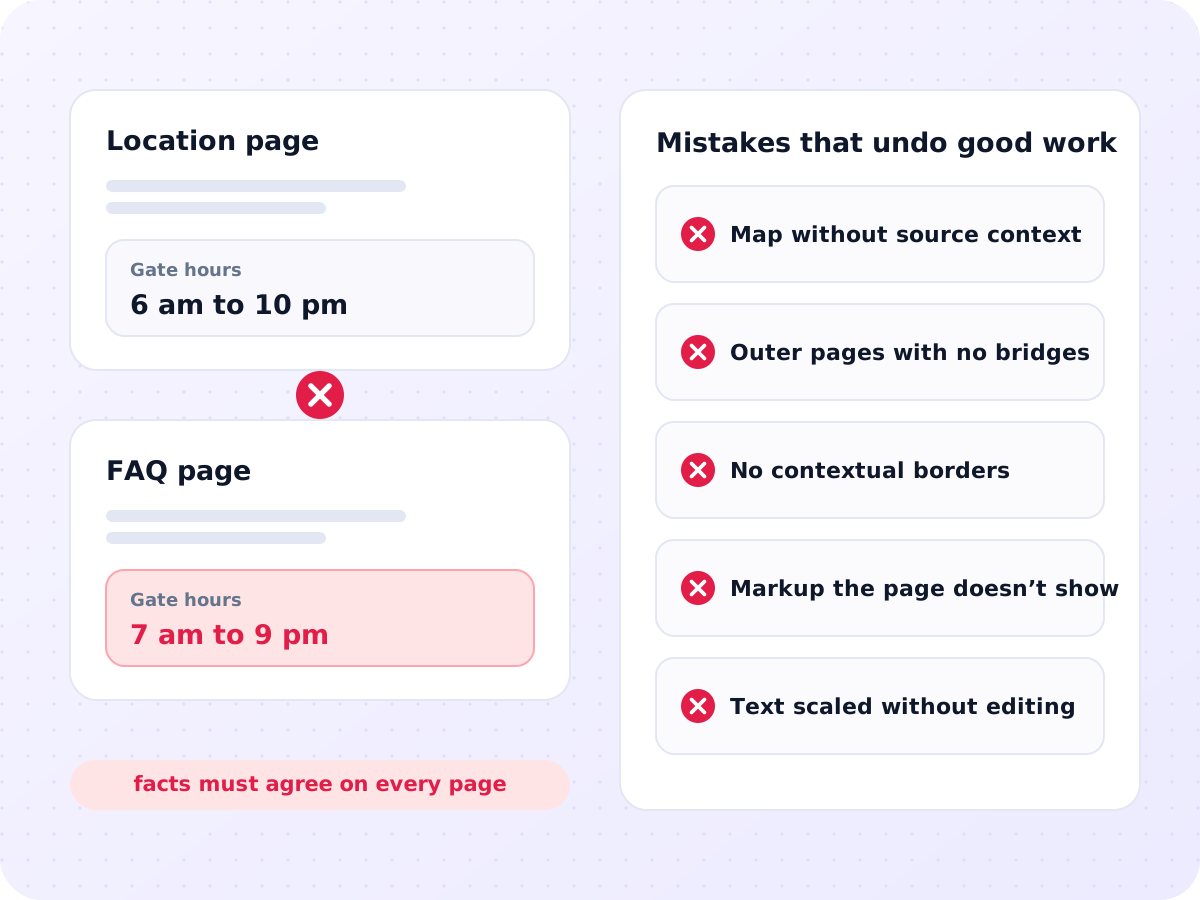
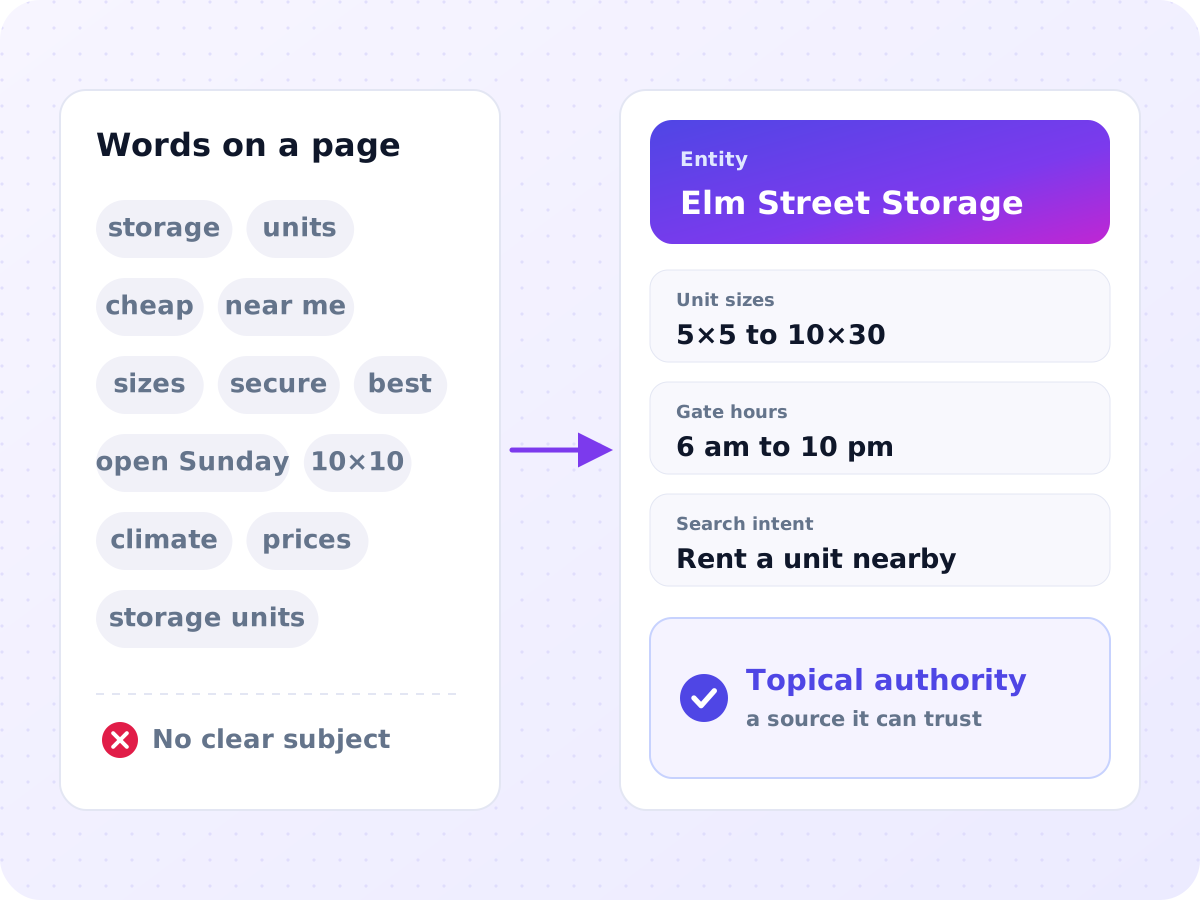
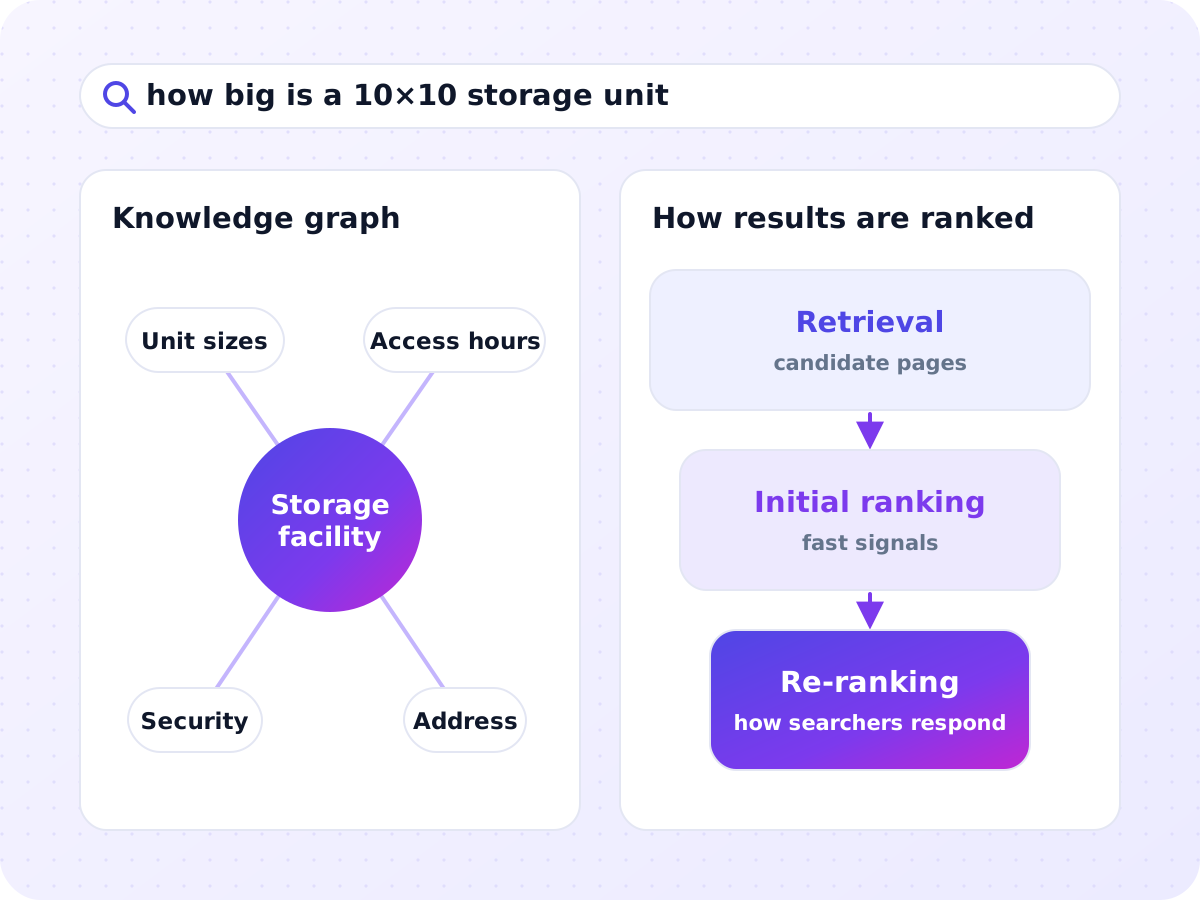
An entity is anything uniquely identifiable: a person, a business, a place, a product or a concept. Search engines store what they know about entities in a knowledge graph, a network of entities joined by relationships, and each fact in it can be expressed as an entity–attribute–value (EAV) triple. “Elm Street Storage (entity) offers unit sizes (attribute) from 5×5 to 10×30 (value)” is one. “Elm Street Storage (entity) has gate access hours (attribute) of 6 am to 10 pm (value)” is another.
This matters because a search engine doesn’t rank a page for a string of characters. It ranks a page as an answer about something. A page that names its entity plainly and states its attributes in simple sentences maps cleanly onto what the search engine already holds. A page that circles its subject with adjectives gives it nothing to store.
Attributes also come in layers. Some are shared by every entity of a type: every storage facility has unit sizes and an address. Some are rare: only a few facilities accept deliveries for business tenants or offer wine storage. Some are unique to one business. Covering the common attributes makes a page relevant. Covering the rare and unique ones is what makes it worth ranking above pages that only cover the basics.